Home Energy Rebates in 2026: What Changed
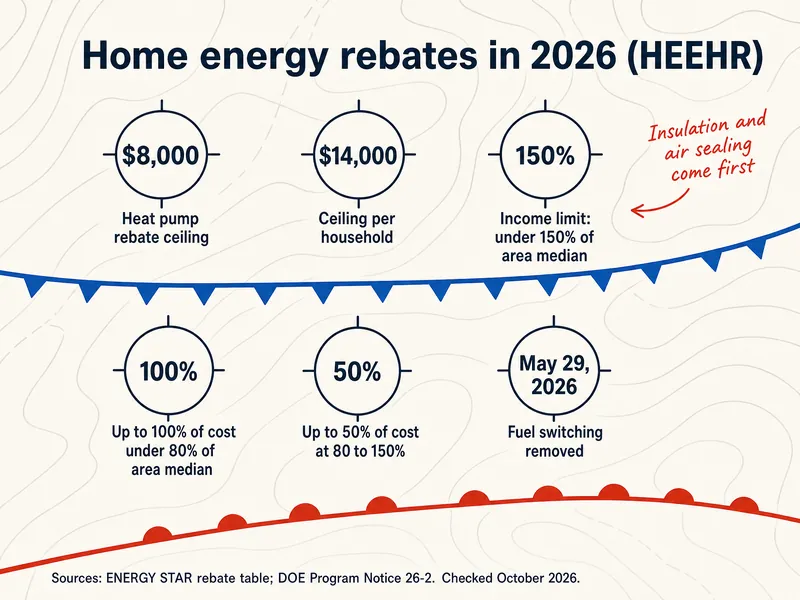
Home energy rebates in 2026 are federal money paid through state programs: up to $8,000 for a heat pump for qualifying incomes, but since May 29, 2026 only when replacing electric equipment.
Read against its sources by The Second Bid · how pages are checked · Updated
Federal ceilings, as of October 2026
- $8,000heat pump for space heating and cooling, HEEHR ceilingENERGY STAR
- $14,000most one household can receive under HEEHRENERGY STAR
- $1,600insulation, air sealing and ventilation ceilingENERGY STAR
- 3 monthstime launched state programs got to adopt the May 2026 changesDOE PN 26-2
How do home energy rebates work in 2026?
Home energy rebates are federal Inflation Reduction Act dollars that DOE grants to states, which then design and run the programs. There are two: HOMES, a whole-home program where DOE says households "can save up to $8,000" based on modeled savings of at least 20%, and HEEHR, the equipment-and-envelope program with a $14,000 household ceiling.
DOE describes HEEHR as paid "at point of sale either at retail outlets or through contractors," so in most designs the discount appears on the invoice rather than as a check later. The federal numbers are ceilings, not promises; ENERGY STAR notes that "States are not required to offer Home Energy Rebates for all technologies or all household types."
| Upgrade | Federal ceiling | ENERGY STAR certified? |
|---|---|---|
| Heat pump for space heating and cooling | $8,000 | Yes |
| Heat pump water heater | $1,750 | Yes |
| Insulation, air sealing and ventilation | $1,600 | Yes |
| Electric load service center (panel) upgrade | $4,000 | Not applicable |
| Electric wiring | $2,500 | Not applicable |
| Household total | $14,000 | Combined maximum |
Who qualifies for home energy rebates?
HEEHR is for low- and moderate-income households, which ENERGY STAR defines as "income less than 150% of the area median." Below 80% of area median income (AMI), a rebate can cover up to 100% of the cost; from 80% to 150% it is "not to exceed 50% of cost."
States can narrow eligibility further, by household type, existing equipment or technology, so the state's own income table and rules decide. HOMES is open to all income levels, and DOE says grantees "may increase rebates for households with income less than 80% of the area median." Renters can qualify in some designs; PN 26-2 expands tenant-based eligibility for rental properties.
What changed in May 2026?
DOE Program Notice 26-2, effective May 29, 2026, rewrote the HEEHR rules. It renamed the program from "Home Electrification and Appliance Rebates" to "High-Efficiency Electric Home Rebates," and it made three changes that matter for an HVAC quote:
- Fuel switching removed. Rebates now go to "upgrading HVAC and appliances only from existing electric equipment to more efficient electric equipment." New construction stays allowable.
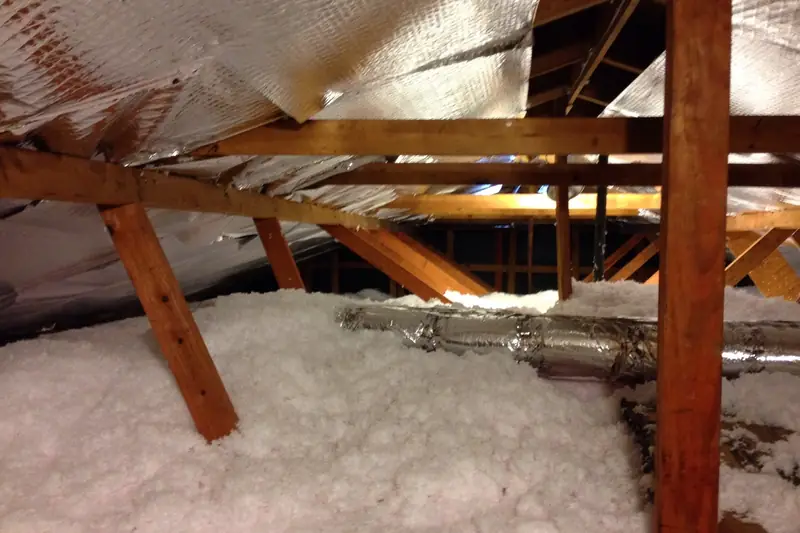
- Envelope first. Homes must "utilize rebates for insulation and air sealing prior to installing heating and cooling upgrades," unless already sealed to "a DOE approved, state-specified level."
- Keep the old system if you like. Homes may "retain existing fossil-fuel HVAC systems when installing a heat pump," even when the heat pump is not the main heat source.
Launched programs had three months from publication to comply. PN 26-2 says reservations already approved under the old rules "are allowed to be executed," but no new nonconforming reservations can be approved. It also encourages states to allow DIY retail purchases, "with the exception of HVAC system installations."
Do rebates still cover replacing a gas furnace?
Not under HEEHR as of October 2026. Swapping a gas, propane or oil furnace for a heat pump is a fuel switch, and PN 26-2 removed "program allowances for upgrades for fuel-switching (i.e. replacement of non-electric appliances)." Older ENERGY STAR and DOE material describing rebates "to replace a non-electric appliance" predates that notice.
What still fits: replacing an electric furnace, electric baseboard or an older heat pump with a more efficient heat pump, and heat pumps in new construction, subject to your state's design. Because PN 26-2 lets a home keep its fossil-fuel system, a state may also allow a heat pump added alongside a gas furnace; ask the state program directly, and see dual-fuel heat pumps for how that pairing works. HOMES, the whole-home program, is a separate track; check its rules with your state.
Ask for
The program name and version
"HEEHR" or "HOMES," and whether the rebate follows the post-May 2026 rules.
The existing-equipment check
How the program verifies your current heating is electric, and what proof it needs (photos, nameplate, utility bill).
The envelope requirement
Whether insulation and air sealing must come first, and whether that work is on the same contract.
How do you find your state's program?
Start with your state or territory energy office, which DOE names as the contact "for more information on the status and eligibility requirements." DOE's own page does not list which states are live, and this site does not name any state as live without reading that state's .gov page.
Look for a state page that shows an income table by county, a list of approved contractors, and the date its rules were updated after May 29, 2026. A rebate that runs through contractors usually means the contractor must be enrolled with the state program; ask before you sign. Questions to ask an HVAC contractor has wording for that.
Line to look for
On a rebate-eligible quote
An example line such as "HEEHR point-of-sale rebate, [state] program, applied after income verification; existing electric furnace documented" names the program, the condition and the proof.
Can rebates combine with utility offers?
Often, yes, but not with another federal rebate for the same project. PN 26-2 repeats the statute: HEEHR rebates "may not be combined with any other Federal grant or rebate…, for the same qualified electrification project." The same notice is "highly recommending" that states "stack and braid HEEHR funding with other programs."
Utility rebates are not federal, so stacking depends on the state and utility rules. The ENERGY STAR Rebate Finder lists utility and maker offers by ZIP code. The federal 25C tax credit is no longer a stacking question for 2026 installs; the heat pump tax credit page explains why it ended after 2025.
Each rebate should appear as its own line on the proposal, with the amount and who files it. That keeps two bids comparable, as how to compare HVAC quotes explains, and protects you if one rebate is denied. Insulation and air sealing that the program requires can change the heating load, so ask whether the Manual J load calculation was run with the upgrades in place.
Observation notes
This page reads DOE's Home Energy Rebates program page, DOE Program Notice 26-2 (effective May 29, 2026) and ENERGY STAR's state rebate program table, all read October 27, 2026. ENERGY STAR's table still carries the older HEAR name and eligibility rows; where it differs, PN 26-2 governs. Left out: which states are live (not verified on state .gov pages), install cost ranges, and HOMES modeling rules beyond DOE's summary.
Outlook questions
Is the federal home energy rebate program paused nationwide?
No pause was found on energy.gov as of October 2026. DOE says rebates are "now available in select states," and PN 26-2 changed the rules rather than stopping the program.
Does the $8,000 heat pump rebate go to every household?
No. It is a federal ceiling for households under 150% of area median income, paid at up to 100% of cost under 80% AMI and up to 50% from 80 to 150%, and each state can offer less.
Can I install a heat pump myself and get a HEEHR rebate?
PN 26-2 encourages states to allow DIY retail purchases and installs, but it carves out HVAC system installations, so a heat pump rebate generally runs through an installer.
Is a rebate reserved before May 29, 2026 still good?
PN 26-2 says approved reservations made under the previous guidance may still be executed. Confirm the status with the state program in writing.
Do I have to insulate before getting a heat pump rebate?
Under PN 26-2, yes, unless the home already meets a DOE-approved, state-specified insulation and air-sealing level. The state sets that level and how it is checked.
Does a federal rebate pay for a heat pump added beside a working gas furnace?
PN 26-2 allows homes to keep existing fossil-fuel HVAC when installing a heat pump, but fuel-switching rebates were removed, so whether a heat pump beside a gas furnace qualifies depends on your state's design.
Who do I contact if my state has no program page yet?
DOE points households to their State or Territory Energy Office for status and eligibility.
Further along the front