Boilers and Hydronic Heat
Boilers and hydronic heat warm a home with water, not air: the boiler heats water, pumps move it through pipes, and radiators, baseboard or floor tubing give the heat to the rooms.
Read against its sources by The Second Bid · how pages are checked · Updated
Ties: Who is behind these links: The Second Bid is run by the same team that owns Plumbing Supply and More, SoftPro Water Systems and Quality Water Treatment, and that is connected to Central Plumbing & HVAC. No link here is paid placement. This page reads federal rules, ENERGY STAR and DOE criteria, ACCA's manuals and makers' own documents, checked in October 2026. Nothing was installed or measured by us; a linked business's description of its own goods is that business's claim. How these links work
How do boilers and hydronic heat work?
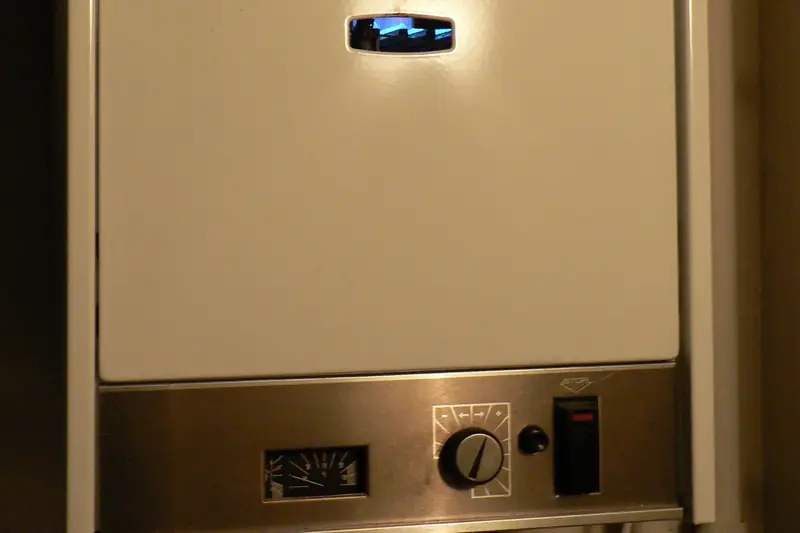
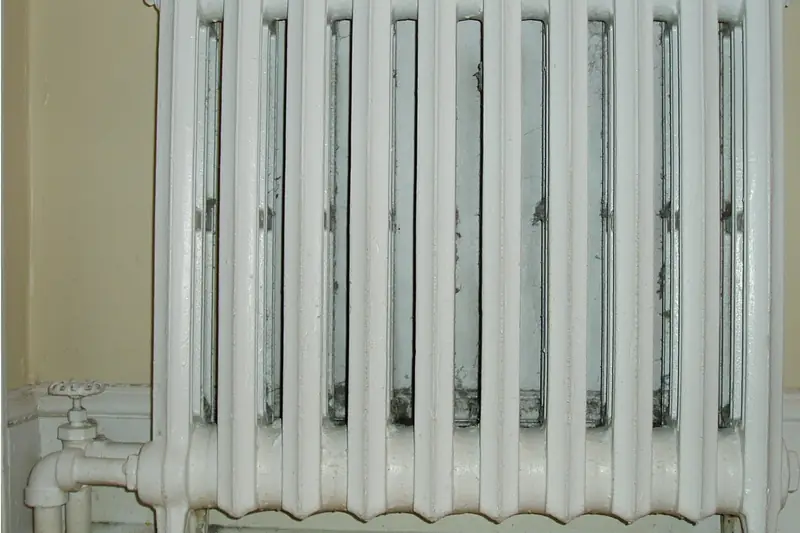
A boiler burns gas, oil or propane (or uses electricity) to heat water, and a circulator pump sends that water through a closed loop of pipes to radiators, baseboard convectors or tubing in the floor. The water gives up its heat in the rooms and comes back cooler to be heated again. DOE's 2022 Energy Saver booklet describes boilers that heat water "for steam or hot water", so older homes may have a steam system instead of the hot-water (hydronic) loop described here.
ENERGY STAR's 2009 heating and cooling booklet puts the main difference plainly: "Boilers do not use a duct system" (PDF). That matters because ENERGY STAR says ducts in a typical house lose "about 20 to 30 percent of the air" moving through them (duct sealing). A hydronic loop sidesteps that air loss, though pipes in unheated spaces still shed heat.
Boiler vs furnace: what is different?
The boiler vs furnace difference is the carrier: a boiler moves heat with water through pipes, a furnace moves it with air through ducts. Both are rated by AFUE, the share of a season's fuel that becomes house heat, and both are fuel-burning appliances that need yearly service and carbon monoxide alarms.
| Point | Hot-water boiler | Gas furnace |
|---|---|---|
| Moves heat with | Water in pipes | Air in ducts |
| Delivers heat through | Radiators, baseboard, floor tubing | Supply registers |
| ENERGY STAR AFUE level | 90% gas, 87% oil | 95% South, 97% North (gas) |
| Central air conditioning | Needs separate equipment and ducts or ductless units | Shares the furnace blower and ducts |
| Replacement prompt (ENERGY STAR) | Older than 15 years | Older than 15 years |
The cooling row is the one that surprises people. A boiler home has no ducts for central air, so cooling usually means separate equipment; ductless mini-splits are one common answer. If you are comparing a boiler with a forced-air system, furnace AFUE ratings and heat pump vs furnace cover the air side.
When does a condensing boiler pay?
A condensing boiler pays when its return water comes back cool enough for the flue gas to condense, because that condensing is where the extra efficiency comes from. Lochinvar's bulletin for its non-condensing boilers draws the line at 130°F: "All non-condensing boilers will develop operational problems if they are continually exposed to system return water temperatures below 130°F" (Lochinvar MLTV-05). The same cool water that harms an older boiler is what a condensing boiler is built to use.
So the emitters matter as much as the boiler. Radiant floors and generously sized radiators run on cooler water and suit condensing; small baseboard loops designed around very hot water may spend much of the winter above the condensing range. ENERGY STAR lists features of efficient boilers, including electronic ignition and "sealed combustion that uses outside air to fuel the burner, reducing drafts and improving safety" (ENERGY STAR boilers).
Boiler numbers on the record
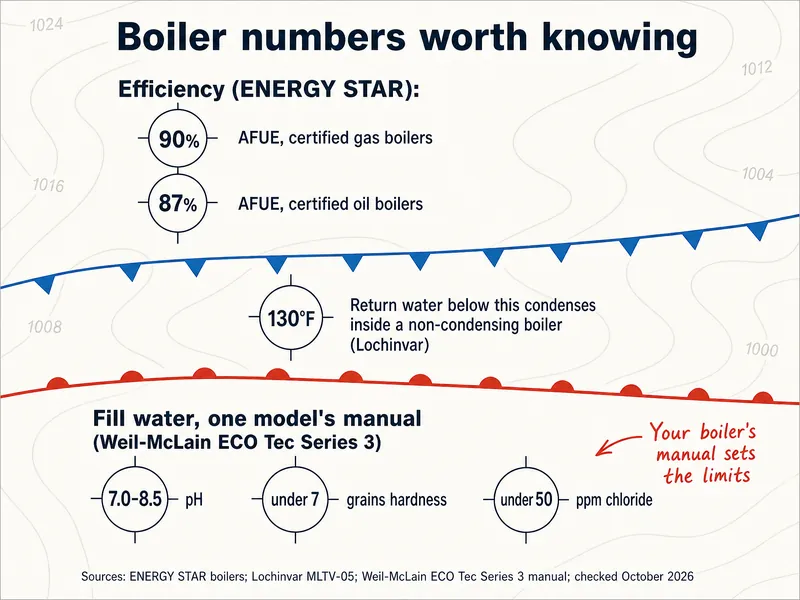
- 90%ENERGY STAR minimum AFUE, gas boilersENERGY STAR
- 87%ENERGY STAR minimum AFUE, oil boilersENERGY STAR
- 130°FReturn water below which non-condensing boilers develop problemsLochinvar
- 15 yearsAge at which ENERGY STAR suggests weighing boiler replacementENERGY STAR
What do zone valves do?
Zone valves let one boiler heat several areas on separate thermostats by opening and closing the hot-water flow to each loop. Resideo describes its Honeywell Home zone valves as "an actuator and valve assembly for controlling the flow of hot water", with a manual opener "for valve operation in the event of power failure" (Resideo). A supply house's zone valve range (Plumbing Supply and More, run by the same team as The Second Bid) shows the sizes and voltages they come in, for the installer to quote against.
Some systems use a circulator pump per zone instead of valves. Either way, a new boiler quote should say whether the existing zone valves, pumps and controls stay or are replaced, and who checks that each zone heats. Zone valve heads are low-voltage parts, but the valves sit on pressurized hot-water piping; leave the work to a licensed heating technician.
Why does boiler fill water quality matter?
Boiler fill water quality matters because minerals and chemicals in the water stay inside a closed loop and can scale or corrode the heat exchanger. Weil-McLain's ECO Tec Series 3 manual says: "Mineral buildup in heat exchangers reduces heat transfer, overheats the materials, and causes failure" (Weil-McLain manual). It also warns that "continual fresh make-up water will reduce boiler life", which is why a leak that keeps topping up the system is a problem in itself.
That manual sets limits for that one model: pH between 7.0 and 8.5, hardness under 7 grains, and chloride no higher than 50 ppm; it tells owners in areas above 7 grains to consult a water treatment company. It also says never to use automotive or standard glycol antifreeze. Other makers and models set different limits, so read your own boiler's manual first and follow its water rules over any general advice.
Where a water test shows hard water, softening is one option for the fill water, alongside the treatment products the boiler maker lists; check the boiler manual's chloride and treatment rules before filling with softened water. The SoftPro ECO softener is sold by SoftPro Water Systems (SoftPro Water Systems, run by the same team as The Second Bid) as one example of the equipment. A water test comes first; a softener is not needed where the water is already within the boiler's limits.
What should a boiler quote include?
A boiler quote should name the model and AFUE, the venting, the water treatment and every part of the loop it touches. ENERGY STAR's 2009 checklist asks the contractor to verify "proper burner operation and proper venting of flue gases" and to inspect vent piping "for leaks or deterioration". Permits vary: York County, Virginia, for example, lists permits for "replacing any fuel-fired furnace, hydronic piping (hot water piping) or its associated duct work" (York County); check your own permit rules.
Boiler quote lines
Line to look for
A sample of a clear line: "Install 95% AFUE wall-hung condensing boiler, 2-pipe PVC venting per manufacturer's manual, condensate neutralizer to drain, flush and treat system water to manufacturer's limits."
Ask for
The heat-loss calculation the boiler size comes from, not the old boiler's nameplate. The Manual J load calculation page explains what that looks like.
Ask for
Which zone valves, circulators, expansion tank and relief valve stay, and a written note that each zone was tested.
Ask for
How the old boiler's chimney will serve any gas water heater left on it.
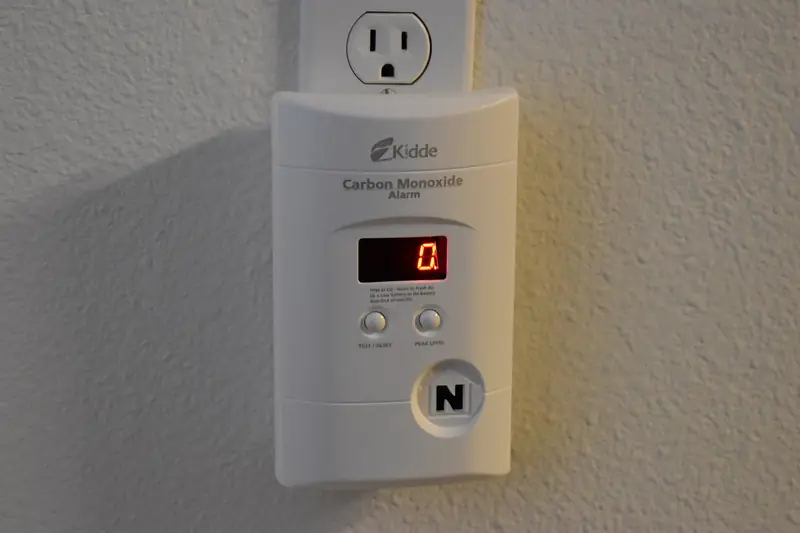
Carbon monoxide rules apply to every boiler. CPSC wants battery or battery-backup CO alarms on each floor and near bedrooms, outside the sleeping rooms, plus a yearly professional inspection of the heating system (CPSC). If an alarm sounds, get everyone outside to fresh air and then call 911 or the fire department; if you smell gas, leave and call the gas utility's emergency line or 911 from outside. If you're unsure, stop and call a licensed HVAC technician. Compare full bids with how to compare HVAC quotes.
Observation notes
This page reads DOE's 2022 Energy Saver booklet, ENERGY STAR's boiler page and 2009 heating and cooling booklet, Lochinvar's MLTV-05 bulletin, Weil-McLain's ECO Tec Series 3 user's manual (part 550-100-598/0925), Resideo's zone valve page, the IRS 25C page, CPSC's carbon monoxide page and York County's permit page, each read in October 2026. Not covered: installed prices, fuel-cost comparisons, steam-system repair, and any work on the boiler's gas, burner or pressure parts.
Outlook questions
Can a boiler provide central air conditioning?
No. A boiler only heats water; cooling needs separate equipment, such as ducted central air or ductless mini-splits. Some homes add a heat pump for cooling and shoulder-season heat and keep the boiler for the coldest weeks.
Is a combi boiler the same as a hydronic boiler?
A combi boiler is a hydronic boiler that also heats domestic hot water on demand. DOE's booklet notes that combination units can provide space and water heating; sizing then has to cover both loads.
Why does my boiler pressure keep dropping?
Usually a leak somewhere in the loop or a failing relief valve or expansion tank, and the automatic fill keeps adding fresh water. Weil-McLain warns that continual make-up water shortens boiler life, so have a technician find the cause rather than topping it up.
Can softened water go into a boiler?
It depends on the boiler. Read the maker's water rules: Weil-McLain's ECO Tec manual limits hardness and chloride, and other makers set their own. Ask the installer to put the fill-water plan in writing.
Should the system be flushed when the boiler is replaced?
Many maker manuals call for cleaning or flushing an old system before a new boiler goes on, and Weil-McLain's manual says to flush any system that has used glycol. Ask for the flush and any treatment chemical by name on the quote.
Are radiant floors always best for a condensing boiler?
Radiant floors run on cool water, so they let a condensing boiler condense most of the season. Large cast-iron radiators can do well too; small baseboard runs may need hotter water and condense less.
Is there still a federal tax credit for a boiler in 2026?
No. The 25C credit stopped with installs completed in 2025, per the IRS. The costs and credits page covers what is left.
Further along the front
Back to The Second Bid front page