Carbon Monoxide and Your Furnace
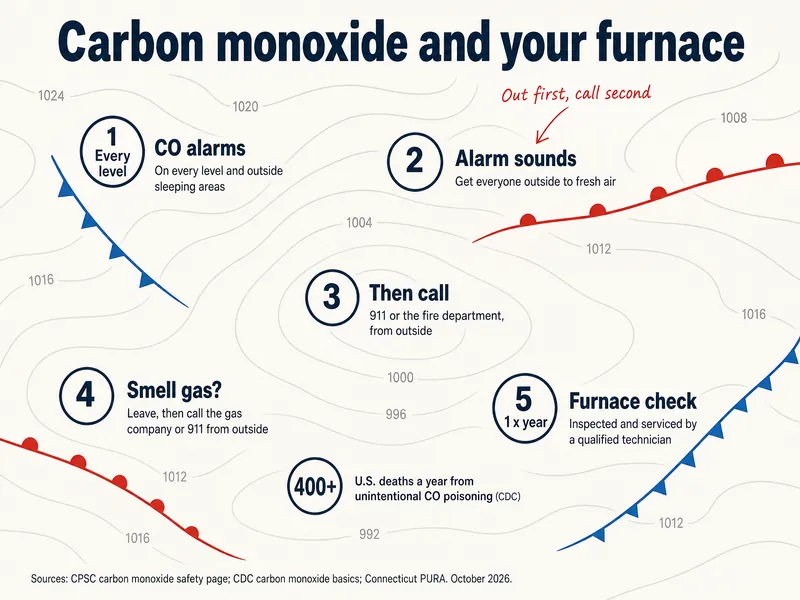
Carbon monoxide from a furnace can't be seen or smelled, so the defenses are CO alarms on every level and outside sleeping areas, plus a professional inspection every year.
Read against its sources by The Second Bid · how pages are checked · Updated
Carbon monoxide by the numbers
- 400+U.S. deaths a year from unintentional CO poisoning not linked to firesCDC
- 100,000+emergency department visits a yearCDC
- 14,000+hospitalizations a yearCDC
- 200+U.S. deaths a year from CO made by non-automotive consumer productsCPSC
- 5 yearsCDC's outer limit for replacing a CO detector, unless the maker says soonerCDC
How can a furnace leak carbon monoxide?
A gas or oil furnace makes carbon monoxide whenever it burns fuel, and it stays safe only while the combustion gases are kept apart from house air and pushed outdoors. Carrier describes the heat exchanger as the part that "keeps toxic combustion gases separate from the breathable air in your home," and the inducer fan as what sends carbon monoxide out "through the flue pipe" (Carrier furnace parts).
That gives three common failure points: a cracked heat exchanger, a vent or chimney that is blocked, loose or corroded, and burners that are out of adjustment. Carrier calls a cracked heat exchanger "a serious issue that requires immediate professional attention." CPSC lists "malfunctioning fuel-burning appliances such as furnaces" among the household sources of CO, along with ranges, water heaters and generators.
Most of these faults are hidden. CPSC's publication 464 lists internal damage, "improper burner adjustments" and hidden chimney blockage as clues you cannot see, which only a trained service technician can find. That is why alarms and a yearly inspection do the work.
Where should carbon monoxide alarms go?
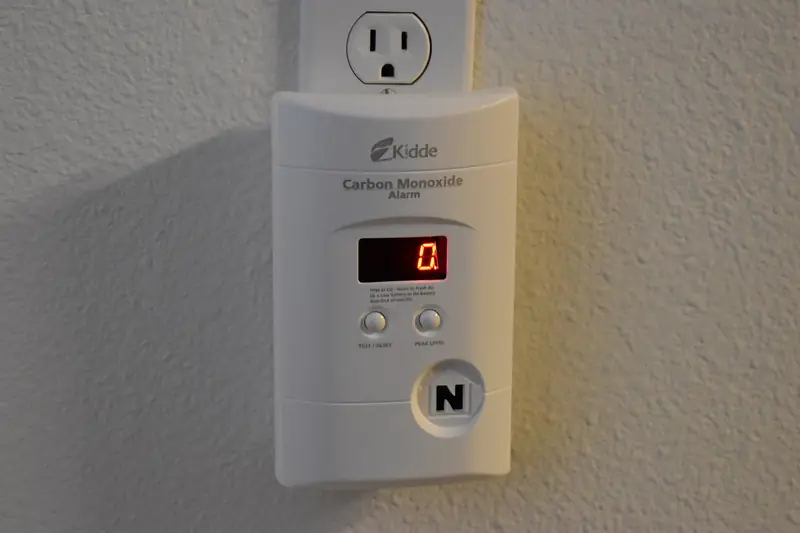
Put CO alarms on every level of the home and outside sleeping areas, per CPSC's carbon monoxide safety page. Battery-operated alarms or plug-in and hard-wired alarms with battery backup all qualify, so the alarm still works in a power outage. CDC words it as detectors "near every sleeping area" (CDC).
Placement details that are easy to miss:
- Keep alarms away from heating vents and from spots that furniture or drapes can cover (CPSC).
- CPSC does not recommend alarms in kitchens or directly above fuel-burning appliances.
- Pick an alarm that meets the current UL 2034 standard, which CPSC helped develop.
- Interconnected alarms are best, CPSC says: "when one sounds, they all sound."
- Check batteries when the clocks change each spring and fall, and replace the alarm by the maker's date or every 5 years (CDC). Newer alarms give an end-of-life signal.
Local codes may add alarm rules; the permits and inspections page covers asking the building department what a furnace replacement needs.
What are the symptoms of carbon monoxide poisoning?
The most common symptoms are headache, dizziness, weakness, upset stomach, vomiting, chest pain and confusion, according to CDC. CPSC adds that early symptoms of low to moderate exposure resemble the flu "but without the fever," and that severity depends on both the CO level and how long someone breathes it.
CPSC publication 464 flags symptoms that appear at home but "lessen or disappear when you are away from home." CDC warns that sleeping people can die before noticing anything, and that infants, older adults and people with heart disease, anemia or breathing problems are more likely to get sick.
What should you do if a CO alarm sounds?
Get everyone outside to fresh air immediately, then call 911 or the fire department. That order comes straight from CPSC: "Immediately move outside to fresh air," and only then phone the fire department or 911.
When the alarm goes off
1. Out first
Leave the house now. Don't hunt for the source, open windows room by room or shut the furnace down from the basement.
2. Count heads
Once outside, check that everyone is accounted for (CPSC).
3. Call from outside
Call 911 or the fire department. If anyone has symptoms, say that CO poisoning is suspected.
4. Stay out
Don't go back in until emergency responders say it is safe (CPSC).
5. Keep the furnace off
Don't use the appliance suspected of making CO until a trained technician has serviced it (CPSC).
If you smell gas instead, the steps change slightly. Connecticut's utility regulator says to leave immediately and tell others to leave, not to flip light switches on or off, and to "call your gas company or 911 for help" from a phone away from the smell (Connecticut PURA). Stay out until the gas company says it is safe. If you don't have the gas company's emergency number to hand, call 911 from outside.
What yearly check does a gas furnace need?
A gas furnace should be professionally inspected and serviced every year. CPSC says "Have the heating system professionally inspected and serviced annually," and that the inspector should check chimneys and flues for blockages and corrosion; CDC says to have gas, oil and coal burning appliances "serviced by a qualified technician every year."
ENERGY STAR's heating and cooling booklet (2009) puts it as a checklist item: verify the furnace "has been tested for proper burner operation and proper venting of flue gases," and have the vent piping inspected for leaks or deterioration. Carrier adds that routine maintenance "includes inspecting the heat exchanger for cracks."
Ask for
Ask for: a written combustion and venting result
A line to look for on the service ticket: "burner operation checked, flue and vent connector inspected for blockage, corrosion and loose joints, heat exchanger inspected." A ticket that says only "cleaned and checked" tells you little.
Ask for: the heat exchanger finding in writing
If a technician reports a crack, ask to see it noted on the ticket with the model number, and get the furnace's warranty status before agreeing to anything. The repair or replace page covers how to weigh that decision.
If the inspection ends in a replacement, the furnace AFUE ratings page explains condensing furnaces; boiler owners need the same yearly visit (see boilers and hydronic heat).
Which furnace warning signs mean call a pro now?
Visible signs of a venting or combustion problem mean the furnace needs a technician before more use. CPSC publication 464 lists the CO clues a homeowner can see:
| Clue | Where to look | What it can point to |
|---|---|---|
| Rusting or water streaking | Vent pipe or chimney | Corroded or poorly drafting vent |
| Loose or missing panel | Furnace cabinet | Combustion area open to the room |
| Sooting | On or around the appliance and vents | Incomplete combustion |
| Debris or soot falling | Chimney, fireplace or appliance | Blocked or damaged flue |
| Loose or disconnected connections | Vent, chimney or appliance | Flue gases escaping indoors |
| Moisture inside windows | Windows near living areas | Possible venting problem |
| Furnace can't heat or runs nonstop | Thermostat and house temperature | Improper appliance operation |
Add to that list an unfamiliar or burning smell (also from publication 464) and any CO alarm, even one that stops after a few seconds. Don't take panels off, look inside the burner area or try to reconnect a vent pipe yourself; CPSC says never to "install or service combustion appliances without proper knowledge, skills, and tools." If you're unsure, stop and call a licensed HVAC technician.
What can a homeowner safely do between inspections?
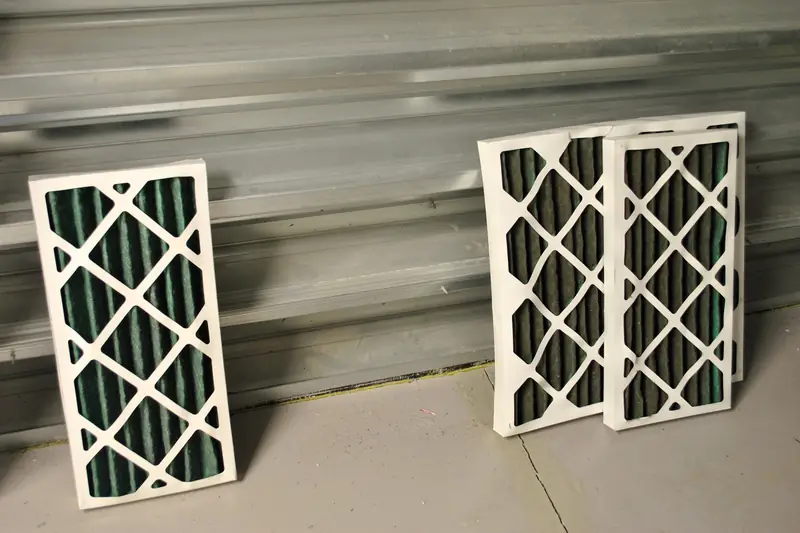
A homeowner's part is small and stays outside the furnace. Test alarms on the maker's schedule, change the furnace filter when dirty, and keep the area around the furnace clear of storage. For high-efficiency furnaces that vent through the side wall, local fire departments advise keeping the outside vents clear and removing snow covering them, "as carbon monoxide build up can provide a hazard" (Town of Geddes, N.Y., 2019).
During renovations, CPSC says to make sure appliance vents and chimneys aren't blocked by tarps or debris. Never heat the house with a gas range, oven or dryer (CPSC). Anything past these steps belongs to a technician. If you're unsure, stop and call a licensed HVAC technician.
Observation notes
This page is based on CPSC's carbon monoxide safety page and its publication 464, CDC's carbon monoxide basics page (reviewed October 26, 2026), Carrier's furnace parts page, ENERGY STAR's 2009 heating and cooling booklet, Connecticut PURA's gas-odor steps and one 2019 town notice relaying fire department advice on snow-covered vents, all read in October 2026. Left out: CO concentration thresholds, alarm brand advice, inspection prices, heat-exchanger test methods and any step that opens the furnace, because those belong to the alarm maker's manual and a licensed technician.
Outlook questions
Does an electric furnace or heat pump need a CO alarm?
An all-electric system burns no fuel, so it doesn't make carbon monoxide itself. CPSC's advice to put alarms on every level still applies if the home has any fuel-burning appliance, an attached garage or a fireplace. A water heater, range or dryer running on gas is enough reason.
Can a CO alarm go near the furnace?
CPSC does not recommend placing alarms directly above fuel-burning appliances or near heating vents. Put the alarm on that level of the home away from the furnace itself, and make sure alarms also sit outside sleeping areas.
What if the CO alarm stops beeping after a minute?
Treat it as a real alarm anyway: go outside and call 911 or the fire department. CPSC says if an alarm sounds again within 24 hours of going back in, repeat those steps and have a qualified technician inspect all fuel-burning equipment.
Does a new furnace still need a yearly inspection?
Yes. CPSC and CDC give no exception for new equipment; both call for annual inspection and service. A yearly visit also lets the technician confirm the vent installed with the new furnace is still sealed and clear.
Should CO alarms be connected to each other?
CPSC's carbon monoxide pages say interconnected alarms are best, because when one sounds they all sound. That matters most in a larger house, where an alarm on the basement level might not wake anyone upstairs. Interconnected models can be wired or wireless; follow the alarm maker's instructions for linking them.
Can a cracked heat exchanger be ignored if the CO alarm is quiet?
No. Carrier calls a cracked heat exchanger a serious issue needing immediate professional attention, and CPSC says an alarm is no substitute for proper upkeep. Ask for the finding in writing and follow the technician's instruction on whether the furnace may run.
Further along the front