Getting a Second Opinion on HVAC
A second opinion on HVAC is worth getting when a technician says replace instead of repair, quotes a major part, or proposes a bigger system without a load calculation; bring the first diagnosis in writing.
Read against its sources by The Second Bid · how pages are checked · Updated
Ties: Who is behind these links: The Second Bid is run by the same team that owns Plumbing Supply and More, SoftPro Water Systems and Quality Water Treatment, and that is connected to Central Plumbing & HVAC. No link here is paid placement. This page reads federal rules, ENERGY STAR and DOE criteria, ACCA's manuals and makers' own documents, checked in October 2026. Nothing was installed or measured by us; a linked business's description of its own goods is that business's claim. How these links work
When is getting a second opinion on HVAC worth it?
Getting a second opinion on HVAC is worth it when the stakes are high and the diagnosis is hard for you to check. A replace-the-system verdict, a compressor or heat exchanger diagnosis, or a quote for a larger system all qualify. A filter, a tripped breaker or a thermostat battery usually doesn't.
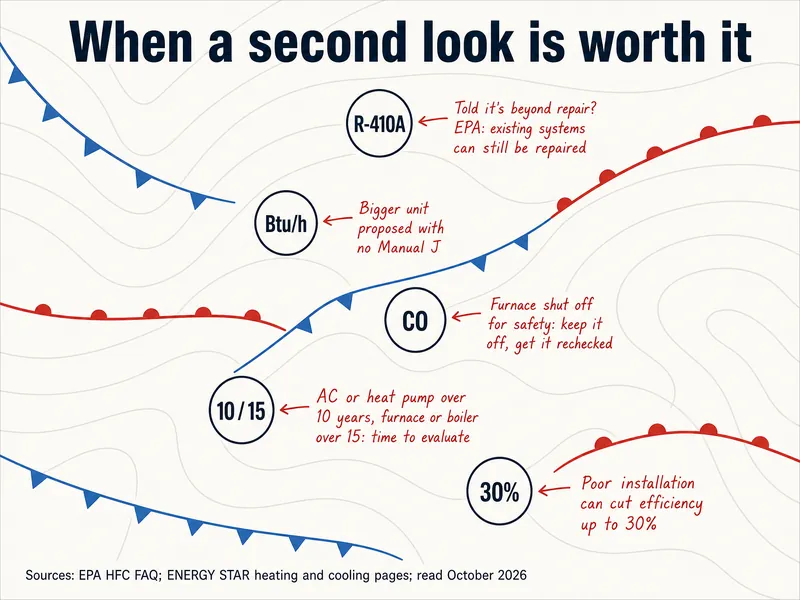
Age alone rarely settles it. ENERGY STAR's replacement checklist lists an AC or heat pump "more than 10 years old" and a furnace or boiler "more than 15 years old" as signs to consider replacing, alongside frequent repairs, rising bills, uneven rooms and humidity problems. Those are triggers to evaluate, so a second visit is a fair step before a large check. The money side is on the repair or replace page.
Which diagnoses deserve another look?
The diagnoses that deserve another look are the ones that end in the largest bill or rest on a claim you can check against a rule. Five come up often:
Diagnoses to have rechecked
"Your R-410A system is beyond repair"
EPA's HFC FAQ says you "can continue to repair your existing" AC and heat pump system, including a condensing unit or compressor. Replacement may still make sense, but not because the law requires it; see the refrigerant change.
"You need a bigger unit"
ENERGY STAR says the contractor should verify size using "Manual J". Ask for the load calculation before accepting an upsize.
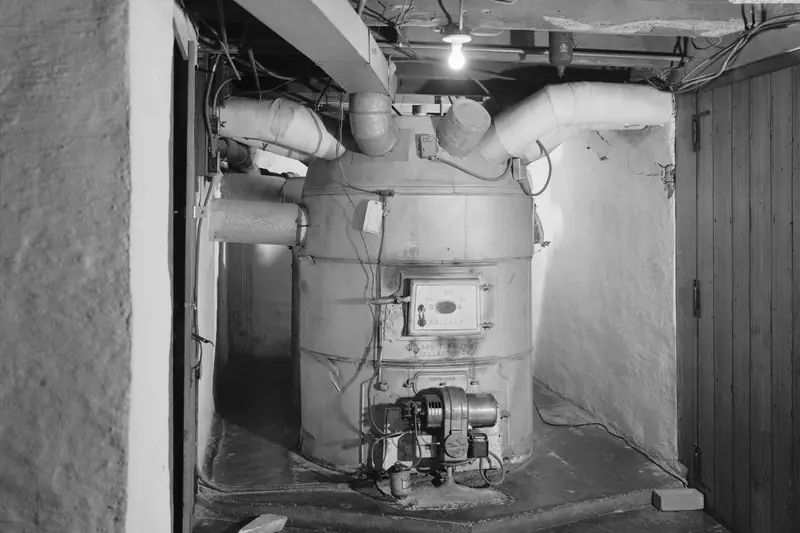
"Cracked heat exchanger"
This is a carbon monoxide concern. Keep the furnace off, make sure CO alarms work on every level, and have it rechecked; ask the first technician to show you what they found.
"The compressor is gone"
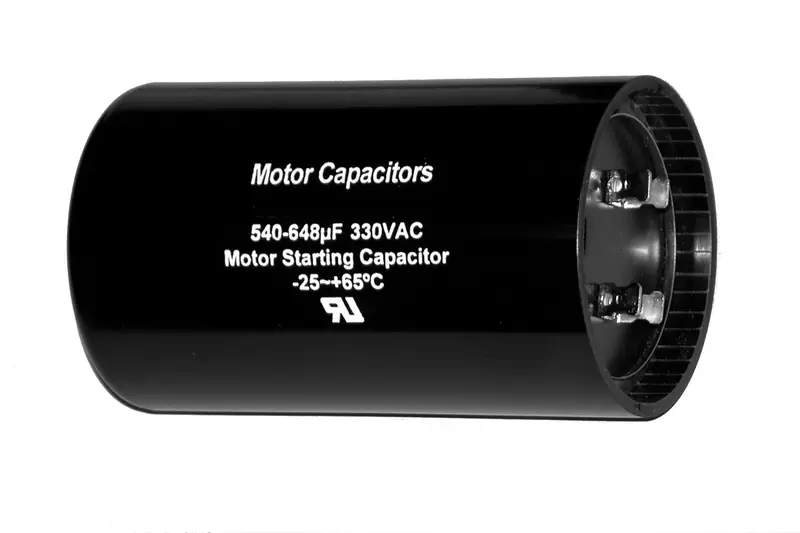
Lennox says a failed capacitor causes "hard starts, humming, or no cooling", symptoms that also get blamed on the compressor. Capacitors hold a dangerous charge even with power off, so leave testing and replacement to a licensed technician.
"It just needs refrigerant"
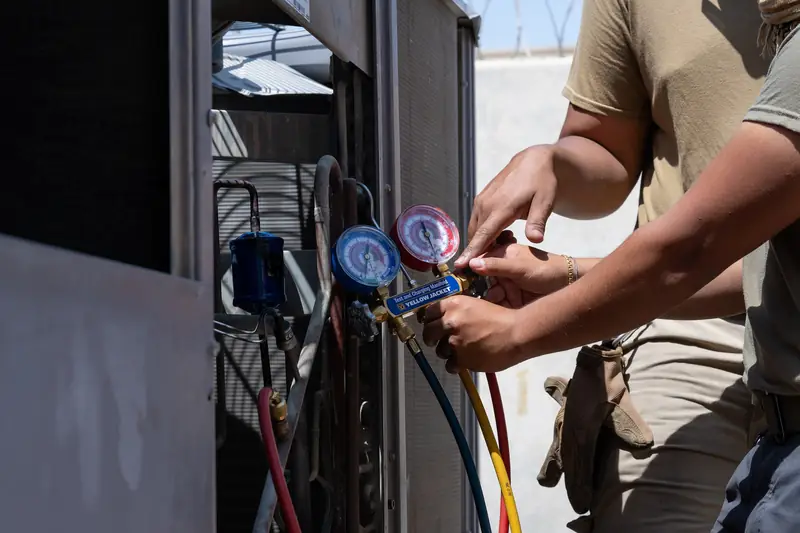
A system that keeps needing refrigerant is losing it somewhere. ENERGY STAR asks contractors to test and adjust the charge; a second technician can look for the leak before anyone adds more.
For the safety items, follow CPSC's advice: if a CO alarm sounds or anyone has symptoms, "immediately move outside to fresh air" and then call 911 or the fire department. If you smell gas, leave and call the gas utility's emergency line or 911 from outside. If you're unsure, stop and call a licensed HVAC technician.
What should you bring to the second visit?
Bring the first diagnosis in writing and the equipment's identity, so the second technician tests rather than guesses. That means the written estimate or invoice with the stated fault, any readings the first technician recorded, and the model and serial numbers from each nameplate. ENERGY STAR's hiring tips also suggest knowing "the model of your current system and its maintenance history" and noting uncomfortable rooms.
Photos help too: the nameplates, the part named as failed (only if visible without opening anything) and the thermostat settings. Don't remove panels or touch wiring to get a picture. Whether to share the first price is your call; some homeowners withhold it so the second visit isn't anchored to it.
What to bring, and what to ask for
Bring
The first company's written diagnosis, quote, and any test readings or photos it gave you.
Ask for
The specific test that confirmed the fault, in writing, with the reading and the maker's limit it was compared to.
Line to look for
An example line such as: "Compressor windings tested open at terminals; capacitor tested within rating; recommend compressor replacement under parts warranty."
How do you compare two different verdicts?
Compare two verdicts by the evidence each one cites, not by which sounds more confident. Line up the stated fault, the test behind it, the parts named, and whether warranty coverage was checked. A diagnosis backed by a measured reading is stronger than one that says "it's old."
If one says repair and the other replace, compare the repair against the remaining warranty, the unit's age against ENERGY STAR's 10- and 15-year triggers, and the efficiency you'd gain. The warranty registration page explains why a registered unit may still have parts coverage, and how to compare HVAC quotes has a line-by-line method for two replacement bids. When the two disagree on a safety issue, treat the unsafe verdict as true until a third check clears it.
| First verdict | What to check | Source |
|---|---|---|
| Replace: R-410A is obsolete | Existing systems may still be repaired, compressor included | EPA HFC FAQ |
| Upsize the system | A Manual J load calculation | ENERGY STAR heat pump page |
| Replace: unit is old | Age is a prompt (10 / 15 years), plus repairs, bills and comfort | ENERGY STAR replacement checklist |
| Top off refrigerant | Leak search and a tested charge, by a certified technician | EPA Section 608; ENERGY STAR quality installation |
What does a second opinion cost?
A second opinion usually costs the second company's diagnostic or service-call fee, which each company sets. Ask for the fee before the visit, what it includes, and whether it's credited toward the repair if you hire them. This site doesn't publish price ranges because no primary source tracks them.
Set that fee against what is at stake. A replacement involves equipment, permit and labor lines worth reading closely, and the installation extras page lists what moves the price. For a small repair, a second fee can exceed any saving.
Who should give the second opinion?
The second opinion should come from a licensed HVAC company with no stake in the first verdict, ideally one that services your brand. ENERGY STAR's hiring tips say to check your state's licensing and insurance rules for contractors and to call references. For refrigerant diagnoses, the technician must hold EPA Section 608 certification; EPA's sales restriction page limits refrigerant purchases for home AC and heat pump systems to certified technicians.
It helps to see how a company describes its diagnostic work before booking. As one example, Central Plumbing & HVAC's heating service page (Central Plumbing & HVAC, connected to the team behind The Second Bid) says its heating diagnostics include combustion analysis and carbon monoxide checks, and its air conditioning service page (Central Plumbing & HVAC, connected to the team behind The Second Bid) lists refrigerant leaks, thermostats and compressor failures among the repairs it handles. Those are the company's own claims, and it serves only Bucks and Montgomery Counties in Pennsylvania; use its pages as a model of what to ask any local company, not as a pick for your area.
Second-opinion numbers
- Up to 30%efficiency lost to improper installationENERGY STAR
- 10 yearsAC or heat pump age at which ENERGY STAR says consider replacingENERGY STAR
- 15 yearsfurnace or boiler age at which ENERGY STAR says consider replacingENERGY STAR
- 608EPA section requiring certification to buy refrigerantEPA
Observation notes
Based on EPA's HFC phasedown FAQ (updated September 2026) and Section 608 refrigerant sales restriction page, ENERGY STAR's replacement, hiring tips, heating-and-cooling and heat pump pages, CPSC's carbon monoxide safety page, and Central Plumbing & HVAC's heating and air conditioning service pages (reported as that company's claims), all read in October 2026. Capacitor hazard wording follows Carrier's and Lennox's capacitor pages. Example quote lines are illustrations. Left out: fee and repair price ranges, forum stories and any ranking of local companies.
Outlook questions
Is it rude to get a second opinion on HVAC?
No. ENERGY STAR's hiring tips tell homeowners to compare proposals on cost, efficiency and warranties, and a second diagnosis is the repair-side version of that.
Should I tell the second technician what the first one said?
Share the fault and the test results so they can confirm or rule them out. Some people hold back the first price so it doesn't steer the second.
Can I keep using the system while waiting for a second opinion?
Not if it was shut off for a gas, carbon monoxide or electrical safety reason. For comfort-only faults, ask the first technician in writing whether running it risks more damage.
What if the first company says the warranty is void?
Ask which exclusion they mean, in writing, and check the certificate for your model. Makers list specific exclusions, such as faulty installation or incompatible parts.
Does a second opinion make sense on a brand-new install?
Yes, if the system short cycles, rooms stay humid or the bills look wrong. ENERGY STAR's quality-installation checks cover airflow, refrigerant charge and duct leakage.
How many opinions are enough?
Two that agree on the fault and its evidence are usually enough. If they disagree on safety, act on the safer verdict until a third check settles it.
Further along the front